


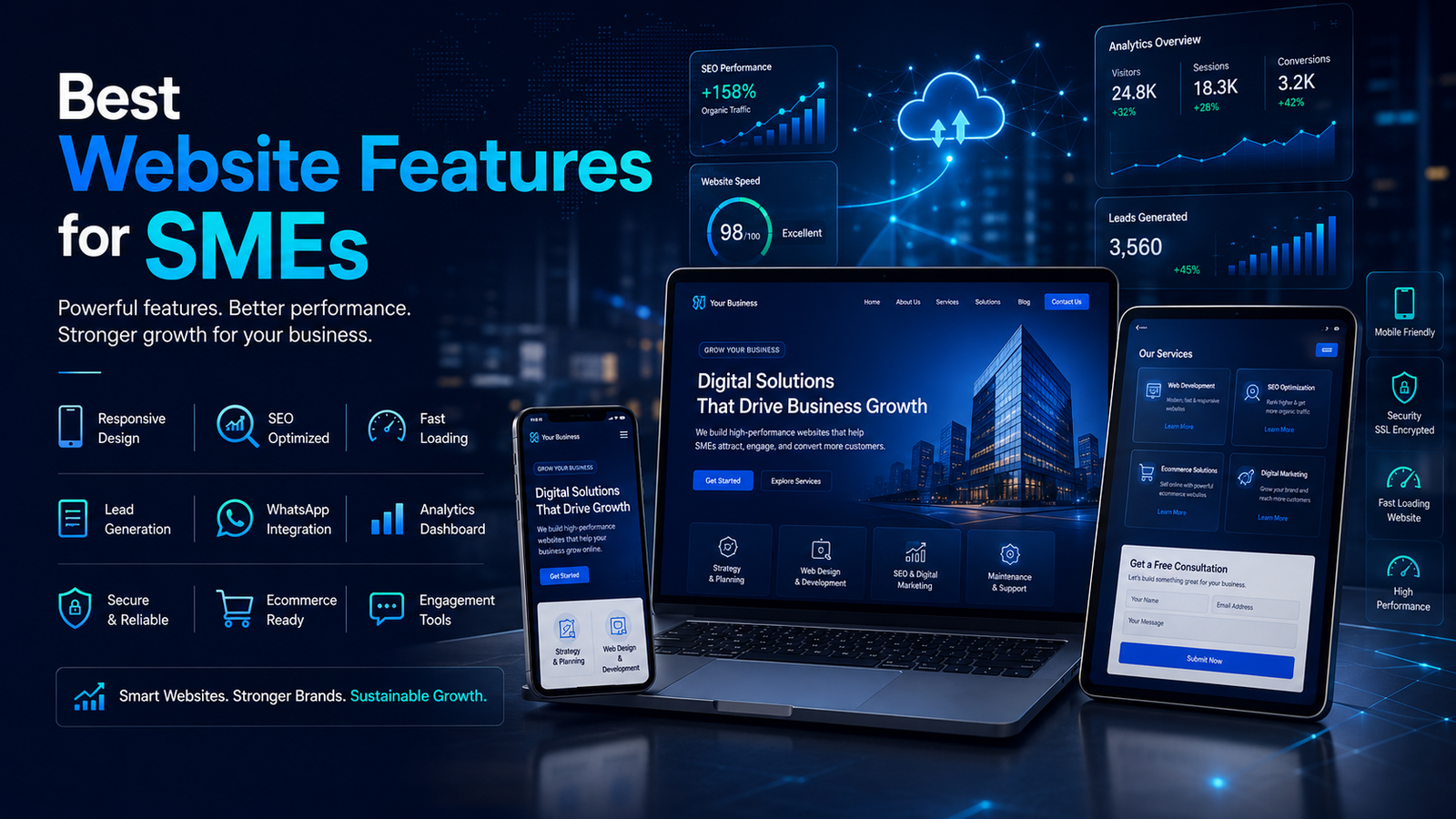
Best Website Features for SMEs
The right website features help SMEs improve SEO rankings, attract customers, generate leads, and grow faster online in 2026.
Introduction
In today’s digital world, having a professional website is essential for small and medium-sized enterprises (SMEs). Customers search online before choosing products or services, and businesses without modern websites often lose opportunities to competitors.
In 2026, SMEs need websites that are not only visually attractive but also optimized for SEO, mobile devices, lead generation, and user experience.
A business website acts as a digital storefront that helps companies build trust, improve visibility, attract customers, and generate revenue online. However, simply having a website is not enough. The website must include modern features that support business growth and customer engagement.
Businesses that invest in professional website development gain a stronger online presence and competitive advantage.
Mobile-Friendly and Responsive Design
One of the most important website features for SMEs is responsive design.
Most users browse websites through smartphones and tablets. A mobile-friendly website automatically adjusts layouts and content for different screen sizes.
Responsive websites improve:
- customer experience,
- mobile SEO rankings,
- engagement,
- and conversions.
Businesses with mobile-friendly websites gain better visibility and retain more visitors online.
ebsite speed directly impacts user experience and SEO performance.
Slow websites frustrate visitors and increase bounce rates. Customers often leave websites that take too long to load.
Fast-loading websites improve:
- customer satisfaction,
- search engine rankings,
- page engagement,
- and lead generation.
SMEs should focus on:
- optimized images,
- fast hosting,
- clean coding,
- and performance optimization
to improve website speed.
SEO-Friendly Website Structure
Search engine optimization is critical for online business growth.
An SEO-friendly website helps SMEs:
- rank higher on Google,
- attract organic traffic,
- increase visibility,
- and generate long-term leads.
Important SEO website features include:
- optimized page titles,
- meta descriptions,
- structured headings,
- internal linking,
- fast performance,
- and mobile optimization.
Businesses that invest in SEO-focused website development gain sustainable digital growth opportunities.
Clear Navigation and User Experience
Customers should easily find information on a website.
A professional SME website must include:
- simple navigation menus,
- clear service pages,
- easy-to-read layouts,
- and organized content.
Good user experience improves:
- customer trust,
- website engagement,
- and conversion rates.
Websites with confusing layouts often lose potential customers quickly.
Contact Forms and Lead Generation Features
A business website should help convert visitors into customers.
Lead generation features such as:
- inquiry forms,
- WhatsApp integration,
- call buttons,
- live chat,
- and CTA sections
help businesses increase customer interactions.
Professional websites guide users toward taking action and improve inquiry submissions effectively.
Professional Design and Branding
Website design strongly influences customer trust.
A professional website should include:
- modern layouts,
- high-quality visuals,
- business branding,
- consistent colors,
- and professional typography.
Strong branding helps SMEs appear more credible and competitive in the market.
Customers are more likely to trust businesses with modern and visually appealing websites.
Secure and HTTPS-Enabled Website
Website security is essential for both SEO and customer trust.
Businesses should use:
- SSL certificates,
- secure hosting,
- and regular updates
to protect customer data and improve website reliability.
Google also prioritizes secure websites in search rankings.
Blog and Content Management System
Regular blog posting helps SMEs improve SEO and attract organic traffic.
A professional website should include:
- blog functionality,
- easy content management,
- and SEO-friendly publishing systems.
Businesses can use blogs to:
- share industry knowledge,
- improve Google rankings,
- attract customers,
- and build authority online.
Content marketing is one of the most effective long-term digital growth strategies.
Social Media Integration
Social media integration helps businesses connect websites with digital marketing channels.
Websites should include:
- social media links,
- sharing buttons,
- embedded feeds,
- and WhatsApp connectivity.
This improves customer engagement and increases traffic from social platforms.
Analytics and Performance Tracking
SMEs should track website performance regularly.
Analytics tools help businesses understand:
- visitor behavior,
- traffic sources,
- conversion rates,
- and customer engagement.
Performance tracking supports better marketing decisions and business growth strategies.
Looking for a professional, SEO-friendly, and high-performance website for your business?
Nexiva Technologies provides modern website development solutions designed to help SMEs improve online visibility, generate leads, and grow digitally in 2026.