


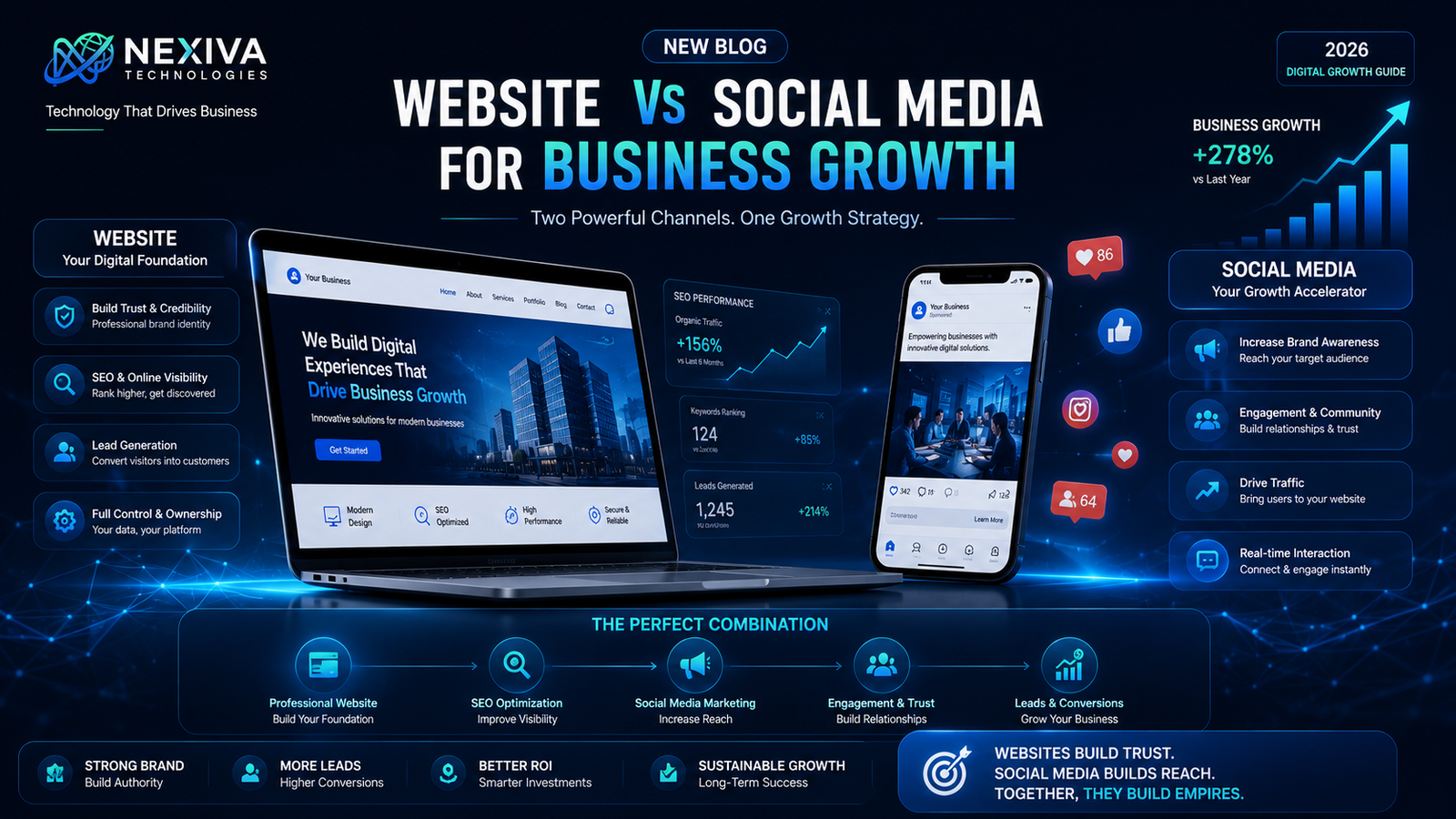
Website vs Social Media for Business Growth
Social media creates attention, but a professional website builds trust, generates leads, and drives long-term business growth.
Introduction
In today’s digital world, businesses are constantly trying to improve their online presence and attract more customers. One common question many business owners ask is: “Should we focus more on a website or social media for business growth?”
The answer is simple — businesses need both. However, a professional website and social media platforms serve different purposes. Social media helps businesses gain visibility and engage with audiences, while a professional website acts as the foundation of long-term business growth, lead generation, branding, and SEO.
In 2026, businesses that combine a strong website with active social media marketing gain a significant competitive advantage online.
What Social Media Does for Businesses
Social media platforms like Facebook, Instagram, LinkedIn, and X (Twitter) help businesses connect with customers quickly. They are useful for:
- brand awareness,
- audience engagement,
- content promotion,
- customer interaction,
- and short-term marketing campaigns.
Businesses can use social media to share updates, promote offers, post videos, and interact directly with customers.
Social media platforms are excellent for attracting attention and increasing reach. They help businesses stay visible and active in front of their audience.
However, social media platforms also have limitations.
Businesses do not fully control social media platforms. Algorithm changes, reduced reach, account restrictions, or platform policy updates can impact visibility at any time.
That is why relying only on social media is risky for long-term business growth.
Why Professional Websites Are Essential
A professional website gives businesses complete control over their online presence. Unlike social media, websites are owned digital assets that businesses can customize according to their goals.
A professional business website helps:
- build trust,
- improve Google rankings,
- generate leads,
- showcase services,
- strengthen branding,
- and increase customer confidence.
Websites act as digital offices that work 24/7. Customers can visit your website anytime to learn about your services, contact your business, or make purchasing decisions.
Websites Improve SEO and Organic Traffic
One of the biggest advantages of having a website is search engine optimization (SEO). Websites help businesses appear in Google search results when customers search for products or services online.
For example, if someone searches:
- “website development company in Odisha”
- “SEO services for small businesses”
- “professional business website solutions”
an optimized website has the opportunity to rank and attract organic traffic.
Social media posts usually have short visibility periods, but SEO-optimized websites can continue generating traffic and leads for years.
Websites Generate Better Leads
Professional websites are designed to convert visitors into customers. Features such as:
- contact forms,
- WhatsApp integration,
- service pages,
- live chat,
- call-to-action buttons,
- and inquiry forms
help businesses generate leads effectively.
Unlike social media, websites allow businesses to create focused landing pages that guide users toward taking action.
This makes websites one of the most powerful lead-generation tools for businesses in 2026.
Social Media Supports Website Growth
Although websites are essential, social media still plays an important role in digital marketing. Social media platforms help businesses:
- drive traffic to websites,
- promote blog content,
- increase audience engagement,
- and improve brand visibility.
The best strategy is not “website OR social media.”
The best strategy is:
Website + Social Media Together
Social media attracts users, while websites convert visitors into customers.
Which Is Better for Long-Term Business Growth?
For long-term success, professional websites provide more value because they:
- improve SEO rankings,
- build stronger brand authority,
- generate consistent organic traffic,
- provide complete business control,
- and support long-term lead generation.
Social media platforms are excellent for promotion and engagement, but websites remain the core foundation of digital business growth.
Businesses without websites may struggle to build trust and compete effectively online.
Conclusion
In 2026, businesses should not depend only on social media platforms for online growth. While social media helps businesses gain attention and connect with audiences, professional websites are essential for credibility, SEO, lead generation, and long-term success.
The most successful businesses combine:
- professional websites,
- SEO strategies,
- valuable content,
- and social media marketing
to create a complete digital growth system.
Businesses that invest in both website development and social media marketing gain better visibility, stronger branding, and more opportunities to grow online successfully.
Looking to build a professional business website that improves SEO, generates leads, and supports long-term business growth?
Nexiva Technologies provides modern website development and digital growth solutions designed to help businesses succeed online.