


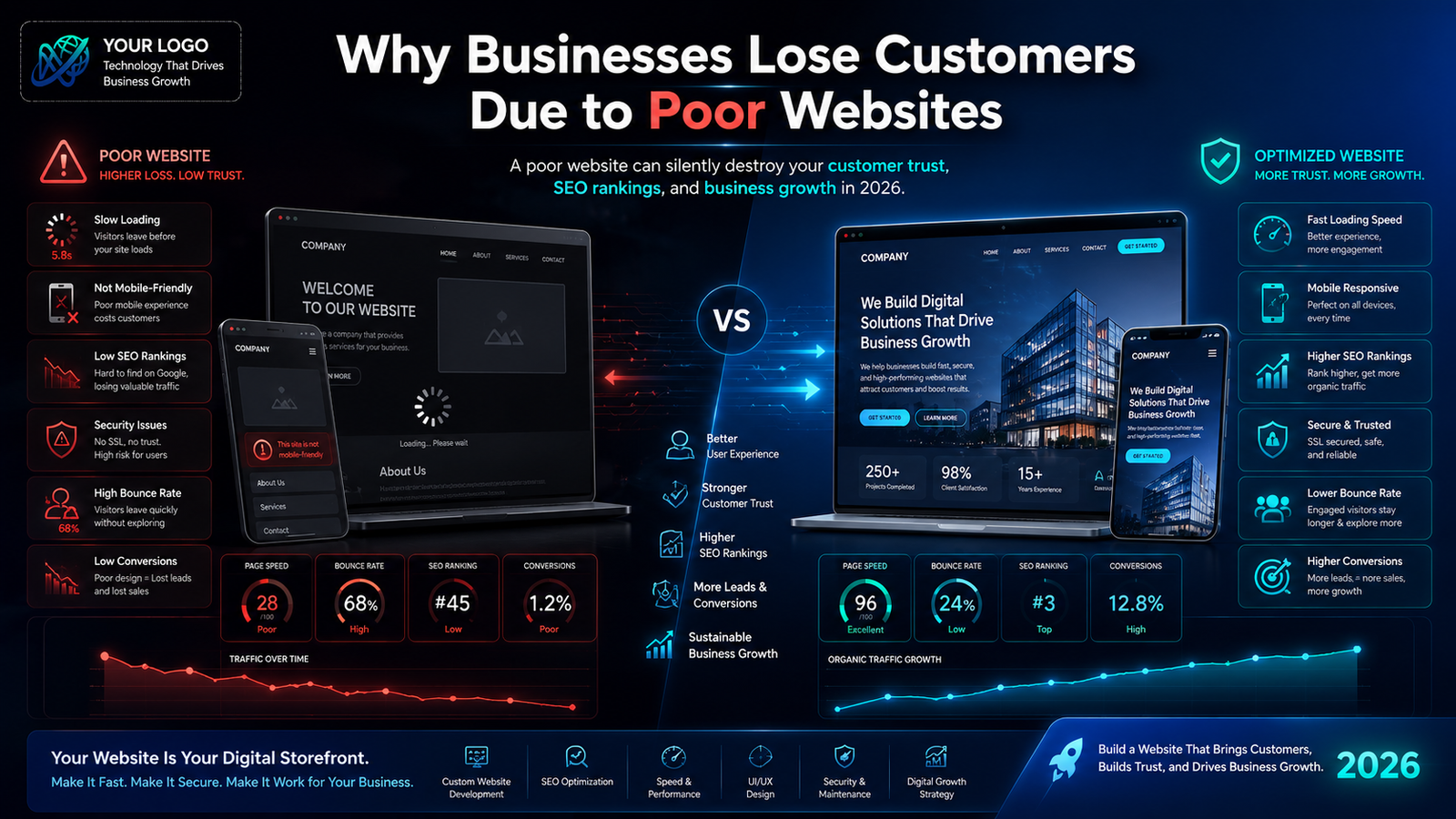
Why Businesses Lose Customers Due to Poor Websites
Poor websites reduce customer trust, hurt SEO rankings, and cause businesses to lose valuable leads and sales opportunities online.
Introduction
In today’s competitive digital world, a business website is often the first interaction customers have with a company. Before contacting a business or purchasing a service, customers usually visit the website to evaluate professionalism, credibility, and trustworthiness.
In 2026, businesses with outdated, slow, or poorly optimized websites risk losing valuable customers to competitors with better digital experiences.
A poor website does more than create a bad impression. It negatively impacts:
- SEO rankings,
- customer trust,
- lead generation,
- online visibility,
- and business growth.
Modern customers expect websites to be:
- fast,
- mobile-friendly,
- secure,
- responsive,
- and easy to navigate.
Businesses that fail to meet these expectations often lose traffic, conversions, and long-term growth opportunities.
First Impressions Matter
A website creates the first impression for many potential customers.
When visitors land on a website, they quickly judge:
- design quality,
- professionalism,
- loading speed,
- navigation,
- and overall user experience.
An outdated or poorly designed website can make a business appear:
- unreliable,
- unprofessional,
- and less trustworthy.
Customers are more likely to leave websites that look outdated or difficult to use.
Professional website design helps businesses create positive impressions and improve customer confidence online.
Slow Websites Frustrate Users
Website speed is one of the biggest factors affecting customer experience.
Modern users expect websites to load within a few seconds. Slow-loading websites frustrate visitors and increase bounce rates significantly.
A slow website negatively impacts:
- customer engagement,
- SEO rankings,
- conversion rates,
- and business reputation.
Businesses often lose potential customers before they even explore products or services.
Fast-loading websites improve:
- user experience,
- customer satisfaction,
- and lead generation.
Performance optimization is essential for online business success.
Poor Mobile Experience Loses Customers
Most users browse websites through smartphones.
Businesses without responsive websites create poor mobile experiences that drive customers away.
Non-mobile-friendly websites often have:
- broken layouts,
- difficult navigation,
- slow loading speed,
- and unreadable content.
Responsive websites automatically adjust to different screen sizes and improve usability across devices.
Mobile optimization is critical because Google also prioritizes mobile-friendly websites in search rankings.
Businesses that ignore mobile optimization lose both traffic and customer trust.
Weak SEO Reduces Online Visibility
A website without proper SEO optimization struggles to appear in Google search results.
Poor SEO causes businesses to lose:
- organic traffic,
- online visibility,
- and potential customers.
Important SEO factors include:
- optimized keywords,
- fast website speed,
- mobile responsiveness,
- meta descriptions,
- structured headings,
- and quality content.
Businesses with poor SEO often remain invisible online while competitors attract more traffic and leads.
SEO-friendly website development supports long-term digital growth and customer acquisition.
Confusing Navigation Hurts User Experience
Customers should easily find information on a website.
Confusing layouts and poor navigation frustrate visitors and reduce engagement.
Businesses often lose customers when websites make it difficult to access:
- service pages,
- pricing,
- contact details,
- or inquiry forms.
Professional websites should include:
- clear navigation menus,
- organized layouts,
- and easy-to-read structures.
Better user experience increases customer retention and conversion opportunities.
Weak Call-to-Actions Reduce Leads
A website should guide visitors toward taking action.
Many businesses fail to include effective lead generation features such as:
- inquiry forms,
- WhatsApp integration,
- CTA buttons,
- live chat,
- and contact sections.
Without clear calls-to-action, customers may leave the website without interacting with the business.
Strong CTA placement improves:
- customer engagement,
- inquiry submissions,
- and conversions.
Poor Website Security Reduces Trust
Customers expect websites to be secure.
Businesses without:
- HTTPS encryption,
- SSL certificates,
- or secure hosting
-
may appear unsafe to visitors.
Security issues reduce customer confidence and negatively impact SEO rankings.
Secure websites help businesses:
- improve credibility,
- protect customer information,
- and build trust online.
Outdated Content and Design Hurt Credibility
Old content and outdated website designs create negative impressions.
Customers may assume businesses are inactive or unprofessional when websites contain:
- outdated information,
- broken links,
- poor visuals,
- or old designs.
-
Modern websites should regularly update:
- blogs,
- service pages,
- visuals,
- and business information.
-
Fresh content improves both customer trust and search engine visibility.
Poor Websites Reduce Business Growth
A poor website impacts more than appearance. It directly affects:
- customer trust,
- SEO performance,
- lead generation,
- and business growth.
-
Businesses with optimized websites gain:
- better search rankings,
- stronger branding,
- higher engagement,
- and improved customer retention.
-
A professional website acts as a powerful digital asset that supports long-term online success.
Conclusion
In 2026, businesses cannot afford to ignore website quality.
Poor websites drive customers away by creating bad user experiences, weak SEO performance, slow loading speed, and low trust.
Businesses investing in:
- responsive design,
- SEO optimization,
- website speed,
- security,
- and modern UI/UX
-
gain stronger visibility and better opportunities to grow online successfully.
A professional website helps businesses attract customers, improve conversions, and build long-term digital credibility.
Looking to improve your website and stop losing customers online?
Nexiva Technologies provides professional website development, SEO optimization, responsive design, speed optimization, and digital growth solutions designed to help businesses improve online visibility, customer trust, and lead generation.