


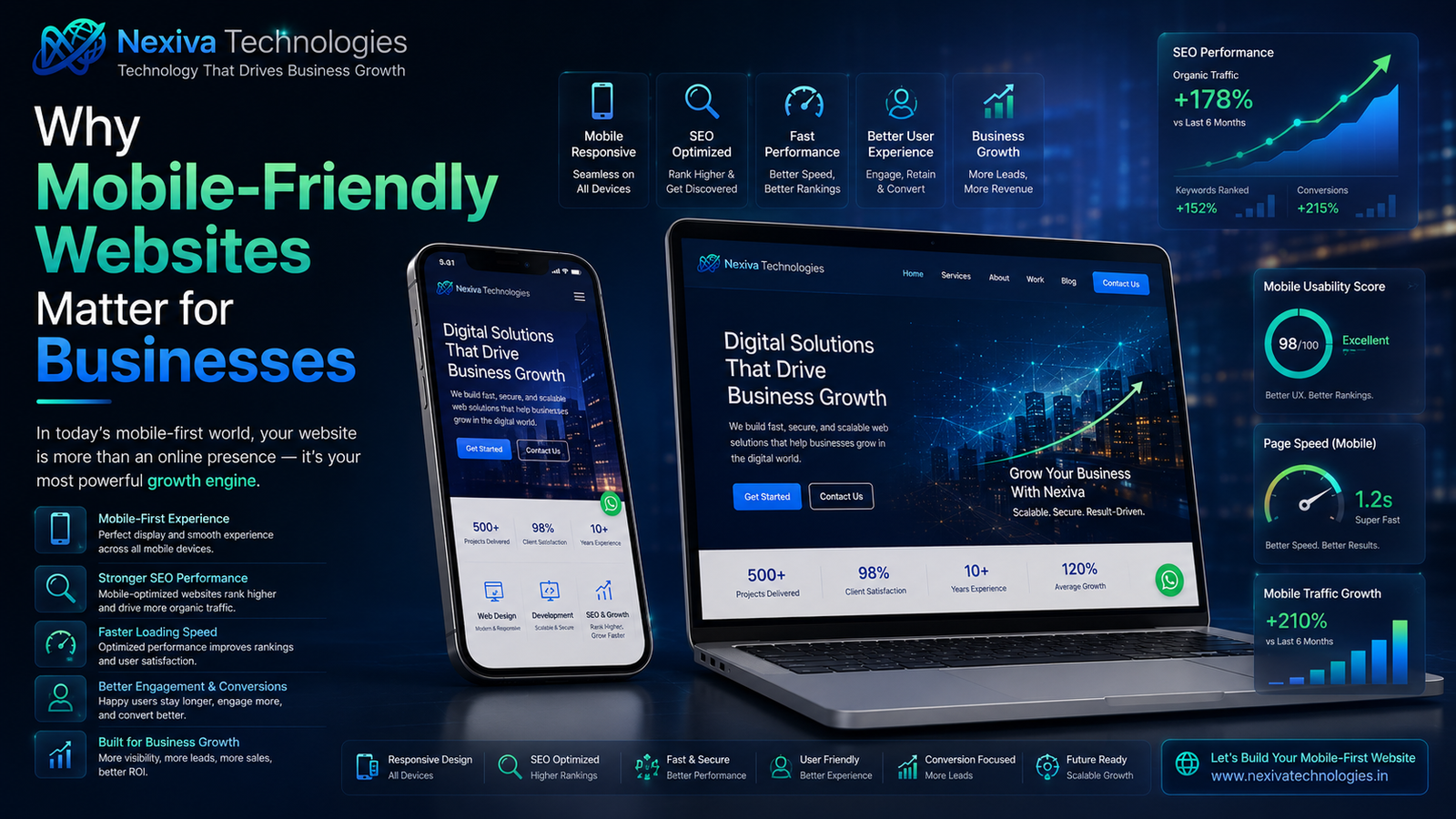
Why Mobile-Friendly Websites Matter for Businesses
Mobile-friendly websites improve SEO rankings, customer experience, and lead generation while helping businesses grow faster online.
Introduction
In today’s digital world, mobile devices have become the primary way people browse the internet. Customers use smartphones and tablets to search for products, services, and businesses every day. Because of this shift, having a mobile-friendly website is no longer optional for businesses.
In 2026, businesses that do not have responsive and mobile-optimized websites risk losing customers, reducing search visibility, and falling behind competitors.
A mobile-friendly website improves user experience, increases SEO rankings, enhances customer engagement, and helps businesses generate more leads online. Modern businesses must ensure that their websites work smoothly across all screen sizes and devices.
What Is a Mobile-Friendly Website?
A mobile-friendly website is designed to function properly on smartphones and tablets. Responsive websites automatically adjust layouts, images, and content based on screen size.
Mobile-friendly websites provide:
- easy navigation,
- readable text,
- fast loading speed,
- optimized images,
- and smooth browsing experiences.
Users should not need to zoom, scroll excessively, or struggle to access information on mobile devices.
Responsive website design ensures businesses deliver professional experiences to all users regardless of device type.
Mobile Usage Continues to Grow
Most internet users now browse websites using mobile devices. Businesses that fail to optimize websites for smartphones lose valuable traffic and customer opportunities.
Modern customers expect:
- fast mobile experiences,
- easy navigation,
- responsive layouts,
- and smooth interactions.
If a website is difficult to use on mobile devices, visitors often leave quickly and move to competitors with better user experiences.
Businesses with mobile-friendly websites gain better engagement and higher customer satisfaction.
Mobile-Friendly Websites Improve SEO Rankings
Google prioritizes mobile-friendly websites in search rankings. Mobile optimization is one of the most important SEO factors in 2026.
Search engines reward websites that:
- load quickly on mobile devices,
- provide responsive layouts,
- and deliver better user experiences.
Mobile-friendly websites help businesses:
- improve SEO rankings,
- increase organic traffic,
- reduce bounce rates,
- and improve online visibility.
Responsive website design also supports better performance in Google’s mobile-first indexing system.
Better User Experience Increases Conversions
User experience plays a major role in online business success. Customers prefer websites that are:
- smooth,
- responsive,
- fast,
- and easy to navigate.
Mobile-friendly websites create positive first impressions and encourage visitors to explore services or products further.
Businesses with responsive websites often experience:
- higher engagement,
- better customer retention,
- increased trust,
- and improved conversion rates.
A professional mobile website helps customers contact businesses, submit inquiries, and complete purchases more easily.
Mobile-Friendly Websites Help Generate Leads
A responsive business website supports lead generation by improving accessibility and usability.
Mobile users are more likely to take action when websites include:
- click-to-call buttons,
- WhatsApp integration,
- fast contact forms,
- responsive landing pages,
- and easy navigation.
Businesses that optimize websites for mobile devices improve inquiry submissions and customer interactions significantly.
Website Speed Matters on Mobile Devices
Mobile users expect websites to load quickly. Slow-loading mobile websites frustrate visitors and increase bounce rates.
Fast and mobile-optimized websites improve:
- customer satisfaction,
- SEO performance,
- and online sales opportunities.
Features such as:
- optimized images,
- clean coding,
- responsive layouts,
- and performance optimization
help businesses create faster mobile experiences.
Mobile-Friendly Websites Build Business Trust
Customers associate modern and responsive websites with professionalism and reliability.
A mobile-friendly website shows that a business:
- values customer experience,
- follows modern digital standards,
- and invests in quality online services.
Businesses with outdated or non-responsive websites may appear less trustworthy to potential customers.
Professional mobile website development helps strengthen branding and improve customer confidence.
Responsive Websites Support Long-Term Business Growth
Mobile optimization is not just about design. It supports long-term digital growth and business success.
Responsive websites help businesses:
- improve search visibility,
- attract more traffic,
- increase lead generation,
- and compete effectively online.
As mobile internet usage continues growing, businesses investing in mobile-friendly website development gain a stronger competitive advantage.
Conclusion
In 2026, mobile-friendly websites are essential for business growth and online success. Responsive website design improves:
- SEO rankings,
- customer experience,
- mobile usability,
- lead generation,
- and business credibility.
Businesses that prioritize mobile optimization create better experiences for customers and achieve stronger digital growth opportunities.
A professional mobile-friendly website is one of the most valuable investments businesses can make for long-term online success.